
Happy 88th Birthday, Amazing Stories!
Amazing Stories is now 88 years old. The more things change, the more they stay the same.

Amazing Stories is now 88 years old. The more things change, the more they stay the same.

An unusual Science Fiction heroine found in an unusual place – the weekend supplement of a daily newspaper.

Fans got together to make sure that Larry will be memorialized properly.

NASA faked the Apollo Moon landings? No dogma is more unyielding than one founded on ignorance and arrogance
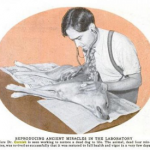
During the Lazarus experiments, Cornish excited much interest in Hollywood. Boris Karloff starred in two films inspired by Cornish’s work, The Man they Could Not Hang (1939) and The Man with Nine Lives (1940). The scientist actually served as consultant to the former film. These movies sparked a “mad scientist” craze in science fiction, and were also among the first to conceptualize open-heart surgery.

An excerpt from the newly released Star Kings trilogy by one of SF’s original star-slingers and galaxy-smashers – Edmond Hamilton!

Dare we laugh at fandom or science fiction? Perhaps we should start thinking a bit more about laughing WITH it.

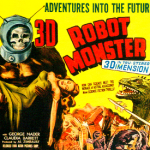
Robot Monster considered as a helix of semi-precious stones (our Amazing apologies to Chip)
There were several notable achievements of the Apollo 14 Moon Mission. One that was abetted by the free time gained using the new flag design was that Alan Shepard became the first golfer on the Moon.
Apollo 12, the second lunar landing mission, was snakebit from the outset. The crew’s problems continued with their attempt to raise the American flag on the Moon.

Bob Jenning’s Fadeaway #39 – sercon at its finest.

Steampunk has brought a fascination with the elaborate mechanisms and ostentatious casings of old clocks. Time measuring and time traveling devices.


R. G. Cameron turns in a stunning forensic history report challenging what we all thought we knew about Plan Nine From Outer Space

With its haunting portrayal of the unthinkable, Fatherland sired (ha ha…) the alternate history sub-genre one might call: “What if … the Nazis won?”

The conclusion of an exploration of one of science fiction’s most influential tales – A Martian Odyssey by Stanley G. Weinbaum

A review of a satiric, transgrssive and humorous look at science fiction by the National Lampoon magazine.

Reading about famous authors before they were famous may give some aide and comfort to those struggling now.

The ever-evolving role of witches in literature and entertainment is examined.

Apollo 11 was the first of six Apollo spacecraft to land on the Moon. A total of twelve men walked on her surface, and every crew planted an American flag at their landing site. Each flag has a story to tell.

An interview with Greg Viggiano, Executive Director of the Museum of Science Fiction
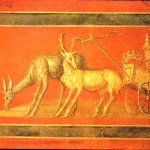
The Romans read science fiction! and R. G. Cameron proves it!
Today, if they think about it at all, most Americans take for granted that the Apollo astronauts planted American flags on the Moon. That wasn’t always the plan.
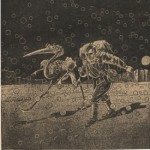
Steve Davidson continues his examination of Stanley G. Weinbaum’s ground breaking tale – A Martian Odyssey.

Final installment in the art hierarchies series discussing the permanance of art.

the future of the way the future blogs

Steve recounts the details of his fannish deflowering

Terry Kemp reprises the famous question “Who Killed Science Fiction?”. His answer will surprise you.


Recent Comments