Chris Barkley (who, like me, thinks you should nominate The Martian Trilogy: John P. Moore, Amazing Stories, Black Science Fiction and the Illustrated Feature Section for a Best Related Hugo Award) sent along an example of more historical infringement of the Amazing Stories name, this time by DC Comics during the 50s.
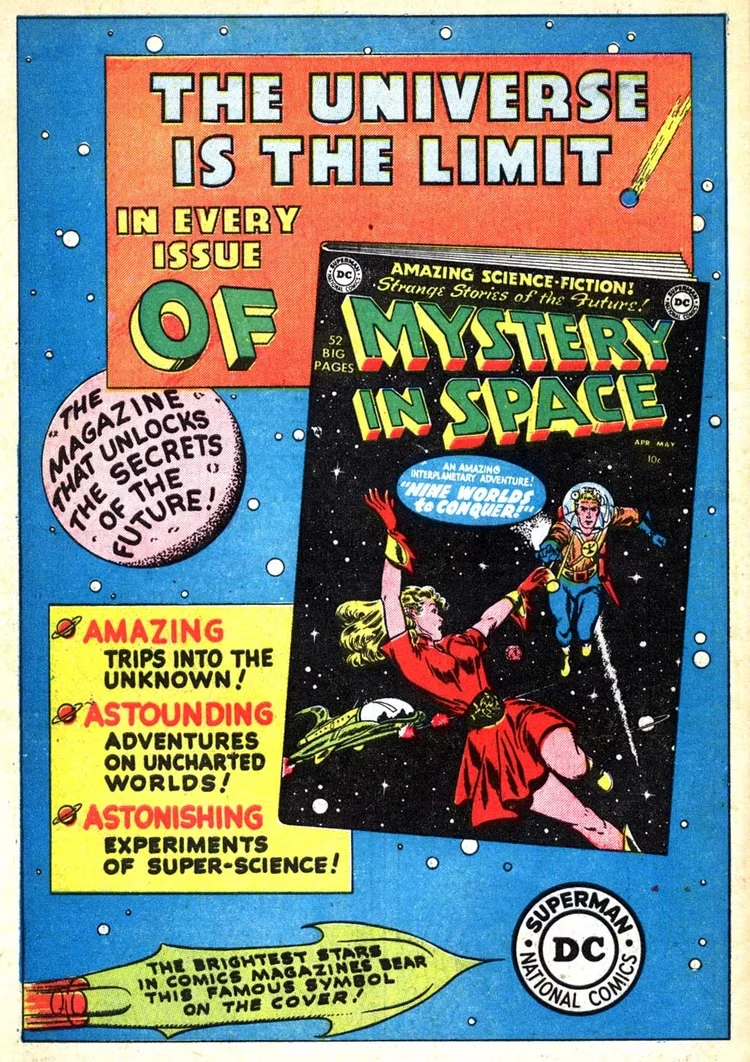 As shown in this advertising promo for its new title = Mystery In Space – the go-to association designed to attract a new audience is “Amazing Science Fiction Strange Stories Of the Future!” in a breathless font.
Unfortunately, (cause DC has deep pockets), while there is no such thing as a statute of limitations for trademark infringement, delaying bringing suit is usually viewed by the courts as prejudicial against the defendant (would be DC in such a case); the owner is just stringing things along to sue for greater loss kind of thing.
Besides, while I was close to being alive when this comic was published, it’s kind of moot as back then I’d have had no standing as I didn’t own the trademarks then.
Ziff-Davis did, and Z-D, or at least Ziff, engaged in their own little bits of infringement – one of the factoids that is featured in the Martian Trilogy: In the last 20s, early 30s, Ziff used “Amazing Stories” as a section head in the IFS. Considering that he purchased the magazine a few years later strongly suggests that he was aware that he was stepping on a pulp magazine’s toes – and probably did so believing that no one in the mainstream publishing establishment would ever notice, because the IFS was only distributed within the Black community. Say hello to Jimmy Crow.
Truth to tell, these days, I’d probably make more money selling a list of potential infringers than I would trying to sue any of them.
You can read the article about this first DC SF comic book here.
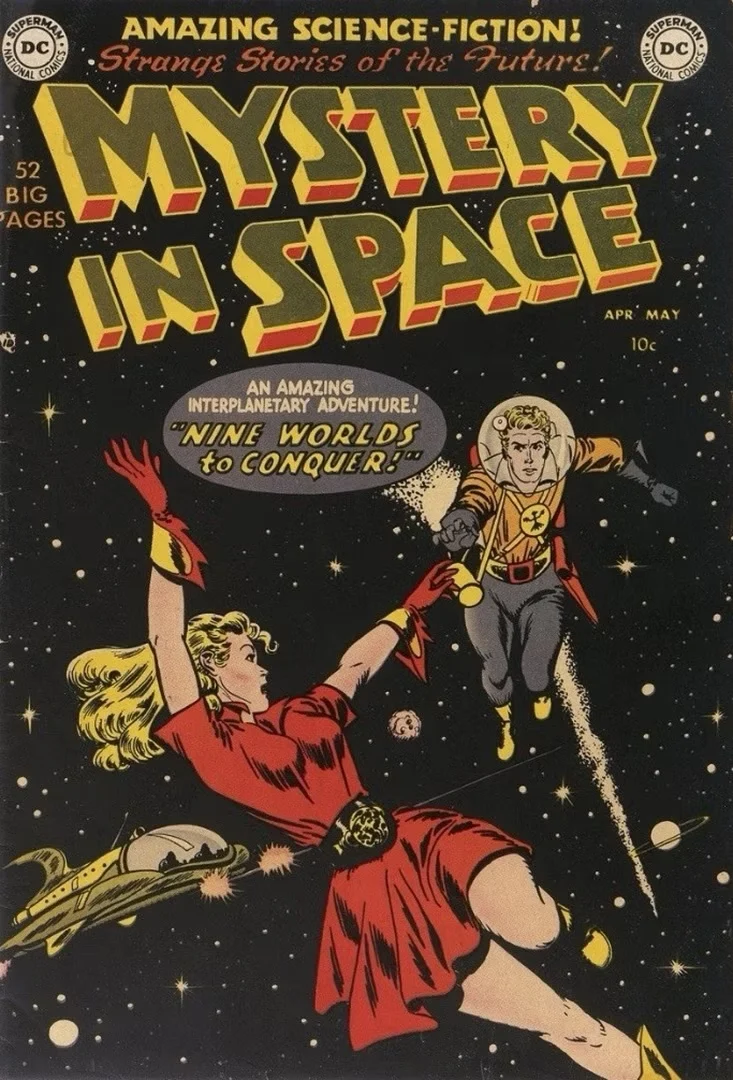
(Check out that cover: It’s Star Lord and Gamora before the Guardians of the Galaxy. I’m guessing he has a ‘thing’ for vacu-freeze women…)

Steve Davidson is the publisher of Amazing Stories.
Steve has been a passionate fan of science fiction since the mid-60s, before he even knew what it was called.