
Review: Exultant, by Stephen Baxter
Exultant is The Dam Busters in space, or Star Wars stripped of its mythopoetic resonances and bolstered by hard physics.

Exultant is The Dam Busters in space, or Star Wars stripped of its mythopoetic resonances and bolstered by hard physics.

The title says it all, doesn’t it? More TOS goodness coming your way!

The latest Retrieval Artist novel – Starbase Human – will throw you some curves.

G. J. Koch (aka Gini Koch) takes readers on a fast-paced, space opera romp, filled with pirates, derring-do, donkeys, sewage, and, well… boobs.
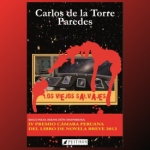
Two novels in review….one that reads like literary chinese boxes

What did “real” fans think of Star Wars in an era “a long time ago…”?

Space Pirates! (Really. What more do you need than to hear those two words? Arrrrrrrrr shiver me airlocks and space the scurvy dogs!

“For God’s sake let us sit upon the ground And tell sad stories about the death of kings.” Richard 11, Act 3, Scene 2 Shakespeare knew how to entertain a crowd and teach history at […]

The Wachowski’s have frequently bewildered with their willingness to experiment…which makes “Jupiter” their strangest concoction yet – a purely conventional one.

Steve looks at two “new” releases–classic SF by the late William Rotsler, multitalented fan, writer and artist.
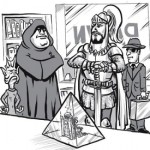
Alex Shvartsman brings the laughs and demonstrates impressive versatility in his debut short story collection.


Secret Cargo by Charles Christian – Billed as a long short story, there are a lot of elements packed into this little space opera mixed with the retro simplicity of steampunk.

Frank Herbert’s Dune has been a favorite subject for science fiction illustrators for years. Now Sam Weber is about to release a new illustrated edition.


An interview with Starfall lead actor Damien Puckler

Let’s have some fun. Let’s live dangerously. Let’s run with scissors. Let’s open up an umbrella indoors. Lets judge some books by their covers! Judging a book by its cover is not wise, but we […]
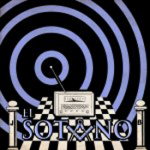
Lets get up to speed on Spanish language developments: a new blog, a third incarnation of Terra Nova, a new radio show featuring fiction by the author, and more

Paradox, edited by Ian Whates and published by Newcon Press, is a collection of new stories exploring aspects of the Fermi Paradox. It features stories by Rachel Armstrong, Keith Brooke & Eric Brown, Pat Cadigan, David L. Clements, Paul Cornell, Paul di Filippo, Robert Reed, Mike Resnick & Robert T. Jeschoenek, Mercurio D Rivera, Adam Roberts, Stephanie Saulter, Tricia Sullivan, Adrian Tchaikovsky, Gerry Webb and George Zebrowski.


THE FINALE: “AI is a spectrum. At what point does a machine intelligence become an AGI, a human-equivalent intelligence? The law is cut-and-dried. The science isn’t. The philosophy certainly isn’t.”

The Superlifters were far below, zooming around the nightside of Venus. They were towing the Nagasaki on what would certainly be its final journey, regardless of whether it succeeded or failed.

The impacts were still coming. The asteroid capture pipeline was years long, and couldn’t be stopped. In fact, a near-collision with Botticelli Station was the reason the mass driver scheme had failed first time around.

With an average temperature slightly above freezing, Earth-like gravity of 1.1 gees, and a breathable atmosphere, the planet was perfectly suited for human colonization. Or rather, it would have been, if not for the Zergi’i, who happened to live there. This race of furry, sentient quadripeds had vaporized the first humans to enter their solar system, and were now busily constructing their own interstellar strike force, based on plundered human technology, to mount a counter-invasion of the Sol system.
She liked having the head with her. It was, she thought, a benign desire: she had conquered, and this was the proof of that. It was healthy for her to want to dwell on her victory, rather than sinking into some kind of PTSD-induced depression.

The sanitation problem was also out of control. Bots from the Cheap Trick (designed for hazardous waste management) tirelessly swept the air in the cathedral, but barely made a dent. Their efficiency, it was fair to say, was degraded by the Galapajin children’s determination to play with them.

Extending its radiator fins like wings, the cathedral once known as the Nagasaki Maru lifted off from the rock.
In its first 100 microseconds of acceleration, it shed spires and lattices, statues clothed in gold and palladium mined from 11073 Galapagos’s rich trove of ores, and a million fragments of rock. Bits of this granitic casing stayed attached to the needle-nose which had been the cathedral’s spire, giving it the appearance of a drill bit covered with barnacles.

Elfrida had glimpsed the crowd inside the cathedral before Yonezawa pushed her back into the airlock. It was a vision of hell. How would she ever find Yumiko in that confusion?

Out of nowhere, a bus-sized fragment plummetted at her. She instinctively threw her weight to the side. The suit picked up on her intent and carried her out of the way, just in time. The fragment hurtled past her and lost itself in space. It looked to have been a piece of the 11073 Galapagos schoolhouse, decorated with children’s murals of the saints.




Recent Comments