I should probably call this a “retro review,” because the book’s five years old now, but I won’t. I haven’t bought a Koontz book since this one, which is odd,because I enjoy his writing. He was a friend of my late friend Jerry Sohl, and he and I corresponded very briefly, but he sems to be a nice guy and he is a good writer IMHO, so consider this a brief apology for not reading any new ones in five years. Although I’m not quite raving about this one, for reasons I’ll make plain, it’s a good read, as always with a Koontz book. Dean is well known as a thriller/horror writer, having been on the NY Times Bestseller List numerous times; in fact, many of his books are more science-fantasy rather than traditional horror. He deviates from traditional horror tropes to give his menaces more of a scientific background than a legendary one.

Figure 2 is the cover of the Kindle book I bought; it’s a (slightly) animated cover, in that the background clouds move and a leaf drops off the centre tree—then the dog stands up. About a 5-second animation, but better than the hardcover illustration, since we haven’t managed to print animated covers—unless you count lenticular covers,w hich can have several seconds of extremely limited animation, but are very expensive to print. A nice little lagniappe for the book; it would be cool if more ebooks had that.
What’s the book about? Well, it’s a Koontz thriller, and it features a golden retriever on the cover, so… obviously, then, it features a dog, specifically a golden retriever. It’s obvious to me that Dean was greatly affected by a (guess what?) similar dog in his past—and that dog was named Trixie. Trixie, or one like her, not only appeared in several of Dean’s books, but also had her own sort of podcast—a dogcast, if you will. Dean outlived her, which is a sad concomitant of having pets—I myself recently lost Chester, an 18-year-old cat—almost invariably, one lives longer than one’s furry (or feathered, or scaled, or whatever) companions. Love and care and feeding can add a year or two to their lives, but their spans are shorter than ours. I think Dean’s on his third or fourth GR (golden retriever) after Trixie.
So he writes a lot of books with dogs in them; the dogs are invariably wonderful animals, unusually intelligent and gifted. The GR in this book is named Kipp. Kipp is a rare superintelligent dog, such as are springing up all over California in this novel; one thing these particular GRs have in common is that they have a mental connection they call “The Wire.” The Wire is not like telepathy; there’s no continuous mental connection between or among dogs who are separated by distance; it’s more like “instant messaging,” where bulletins or information are sent out by wireless mental telegraphy, although they can telepath at short range.
Another major character is Woody Bookman, who is an 11-year-old high-functioning autistic boy, who hasn’t spoken a word since his father died in a helicopter crash something like 8 years before. Although he is a “special needs” youngster, he appears to have an IQ of 186 (though how this was tested remains unclear to me) and is emotionally crippled in many ways due to his embarrassment at being “abnormal.” (My word, not his.) His mother, Megan Bookman, who makes a living as a painter, has devoted her life to easing the boy’s path through life.
Their adversary is Lee Shacket, who heads a genetic research facility that masquerades as a cancer research project. Shacket used to date Megan occasionally, years ago before she married her late husband, and has an obsession about her, though he is single—and could have his pick (and often does) of “hotties” [his word]—and she is a widow devoted to her special-needs son. Shacket is a ruthless personality who is, despite being very bright, all ego and devoted to getting ahead in a world he believes is separated into predators and prey. He works for a billionaire man named Dorian Purcell, who is much like him, only more so. Other characters who figure in this book include Sheriff Hayden Eckman, who used to be an “ambulance-chasing lawyer,” but who has political ambitions and ruthlessly uses his elected office to get ahead. He sometimes butts heads with County Coroner Carson Conroy, who had a great relationship with the former sheriff, who was someone dedicated to his job and service to the county, rather than his own advancement. There are sundry minor characters, but these are ones you’ll learn fairly early.
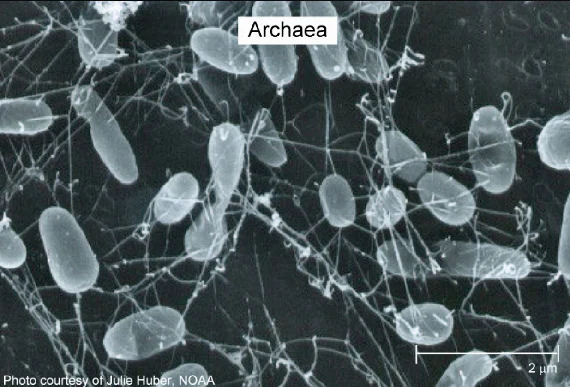
Here’s another main plot point: the research centre that’s supposedly doing cancer research, headed by Sacket and owned by Purcell, is actually trying to create an ultrahuman (similar to Friederich Nietzsche’s Übermensch in his Also sprach Zarathustra book—the Übermensch is a superior human who has raised himself to the peak of development, leaving behind all outdated moral precepts and ideas) using a monocelled protozoan called archaea. As far as I understand it—and I’m no expert, all life falls into the categories prokaryotes or eukaryotes. Bacteria—and the archaea was once thought to be bacteria—are prokaryotes; these single-celled organisms have no nucleus behind a cell wall, with some specialized parts similar to human organs. Prokaryotes have no nuclei, but I’m not sure about the cell walls, and they have no specialized “organs.” (Archaea were once thought to be prokaryotes but some are now known to have developed into eukaryotes; what’s really significant about them is that they can be used to transfer genetic information from one cell to another (that latter part is according to the book; I have to depend on Dean’s research for this). The lab is in a city called Springville; there are nearly twenty researchers plus Sacket as administrator.
This research, using human genetic material, is strictly forbidden—for obvious reasons; like viral weapons research, governments want to control this kind of dangerous research (which should, in my less-than-humble opinion, be carried out only in outer space). Unbeknownst to Les and his scientists, Dorian has a fail-safe option in place—should a breach in decontamination occur, the whole facilty (including the occupants) will be sealed and destroyed by fire. And such a breach does occur—but Les has a short jump on the lockdown and, like the soldier in Stephen King’s The Stand, leaves the facility infected before it is destroyed.
Sacket, like Francis Dolarhyde in Red Dragon, believes he is “becoming”—but unlike Dolarhyde (who was insane), Sacket is receiving non-human DNA in his genes, causing an ongoing physical transformation, making him stronger and faster than most people. At the same time, his mental state is deteriorating, causing him to lose all inhibition and to focus on Megan Bookman as a target for his insanity. Fleeing the destruction of the Springville facility under an alias, he begins killing and eating (parts of) random people he encounters.
Kipp “hears” Woody through the Wire, which amazes him—to date, only dogs could transmit or receive through the Wire, and Kipp’s owner/caretaker (his abilities have been hidden from the world at large, for fear the government would want to grab him and take him in for testing), Dorothy, is literally dying of old age. When she does, Kipp feels free to go to the Tahoe area to find the boy who can “talk” to dogs. So all the elements are in play—Conroy has to autopsy two of Sacket’s victims—and the plot thickens. Knowing only that Woody is “special needs” but not knowing he is actually a genius-IQ’d person, Sacket plans to dispose of Woody as a useless encumbrance and take Megan as a sex slave—the “becoming” has increased his sexual appetite enormously, though it seems to be satisfied more by violence than by actual sexual congress.
Several key things are emphasized over and over in this book: the first is the thousands of years humans and dogs have joined as friends and helpmeets; the second is that evolution cannot be hurried by science. Assuming that telepathic abilities are becoming more common in dogs and that Woody is a forerunner of human evolution, whereby dogs and people will be united naturally as an evolutionary process, destined to occur since the first dog and first human shared a campfire. Another is that all human ills occur because of greed and ego; lies and deceit, that don’t occur in dogkind, will have to disappear in human beings as part of the evolutionary process. So Les Sacket’s “becoming” is an evolutionary blind alley that might disturb the actual process between dog and human being. The tension when you see Sacket’s progress towards the two is very well done; there’s also a side threat that Dorian’s found out that an attempt to get into the Dark Website and find out about his involvement will result in him getting rid of Woody and Megan. And here the description ends; with luck, to send you off to Amazon or wherever to buy your own copy.
The book concludes satisfactorily, with issues resolved and a bright future forecast for the “good” protagonists; however, I—being kind of a cynical person—can’t whole-heartedly endorse the happy ending. Life isn’t that neat or cut and dried. Not every situation IRL (In Real Life) ends well for the few, but not for everyone. And I take issue personally with the idea that evolutionary jumps are that convenient, as they are in this book. Heck, in the Real World, events are happening almost daily that should knock Pollyanna and Rebecca from Sunnybrook Farm right on their gingham-clad buns.
Books and movies have conditioned us to expect a happy ending, but life is not always (or maybe even usually) that generous. But on the other hand, I guess we don’t need to read doom and gloom, as life lately seems to be handing us more than our share. It’s a tough question. As the Bard says, “Whether to suffer the slings and arrows of outrageous fortune, or to take arms against a sea of troubles and by opposing, end them. (Literarily, in this case.) But like Koontz, I don’t think science can or should be able—or allowed—to “jump the queue”; we age because our cells don’t reproduce perfectly. I don’t think any organism can live forever (or should? That question is beyond the scope of this review).
Please let me know what you think of this column. Facebook me, or email me (stevefah at hotmail dot com) with anylikes or dislikes. If you thought it was too long or short, let me know—if you hated it, please let me know (and why) so I can do better! My opinion is, as always, my own, and doesn’t necessarily reflect the views of Amazing Stories or its owner, editor, publisher or other columnists. See you next time!

Steve has been an active fan since the 1970s, when he founded the Palouse Empire Science Fiction Association (PESFA) and the more-or-less late MosCon in Pullman, WA and Moscow, ID, though he started reading SF/F in the early-to-mid 1950s, when he was just a sprat. He moved to Canada in 1985 and quickly became involved with chairing or helping run Canadian cons, including ConText (’89 and ’81) and VCON. As a fan, he’s published a Hugo-nominated (one nomination) fanzine, New Venture, and he’s founded two writing groups (Writers’ Bloc and Writers of the Lost, Ink). He’s emceed and auctioned art at many West Coast and Northwest conventions including one Westercon. As a writer, he’s published a couple of books and a number of short stories (including one in Compostella [Tesseracts 20], and has collaborated with his two-time Aurora-winning wife Lynne Taylor Fahnestalk on a number of art projects. As of this writing he’s the proofreader for R. Graeme Cameron’s Polar Borealis and Rhea Rose’s Polar Starlight publications. He’s been writing for Amazing Stories off and on since the early 1980s. His column can be found on Amazing Stories most Fridays.