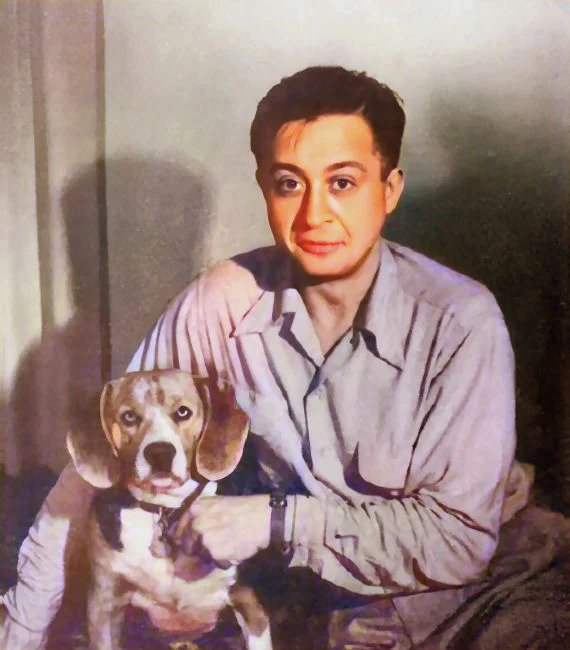
James H. Schmitz only lived to age 69, and only wrote from the 1940s to the late 1970s, yet he left a legacy of books and stories that are, in my opinion, more relevant to today’s world and more lasting than some of the SF published more recently. According to the late Gardner Dozois, as well as, for example, Wikipedia, Schmitz wrote “Space Opera,” which may or may not be “damning with faint praise,” yet I submit that his kind of space opera is of higher quality than Star Wars. (Not to diss the latter, which is lots of fun and quite entertaining; I’m particularly fond of Grogu and The Mandalorian.) In fact, Schmitz’s stories of The Hub (more about that later) are so good that Eric Flint and Baen Books collected all the Hub stories into four volumes available from Amazon, as are most of Schmitz’s stories.
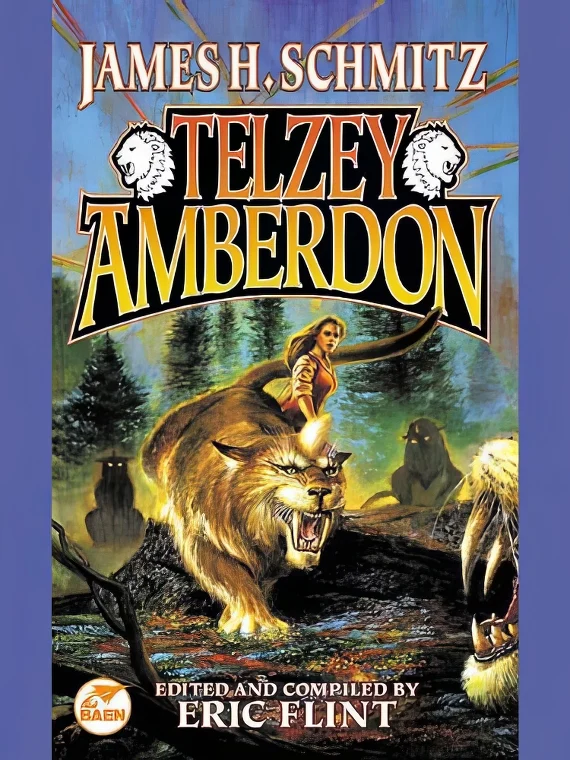
The Hub (Figure 2) is, in some of Schmitz’s stories and novels, the center of a galactic culture (though not in all his stories or novels) in what I assume is this galaxy; set in a far-flung future where faster-than-light travel and communication are achieved through the use of “subspace.” Unlike Star Wars, however, distances are shortened, though not eliminated, by use of subspace, as it can take days or longer to travel to far-flung destinations.
As opposed to traditional space opera, there are few space battles or interstellar wars in the Hub stories, particularly in those involving protagonists Telzey Amberdon or Trigger Argee. One of Schmitz’s strengths was that he was prone to having strong female lead characters; the two mentioned are examples—while completely female (not just male characters written as women), his characters are believable as women—not seductive, helpless, or slightly stupid women, either. In that way, he was ahead of the curve in science fiction, where most protagonists were male. Another area was in the field of ecology—a number of his stories featured well-thought-out episodes of ecological balance and/or disruption, again ahead of the curve. He also invented a galaxy-wide “internet” called “The Comweb.”
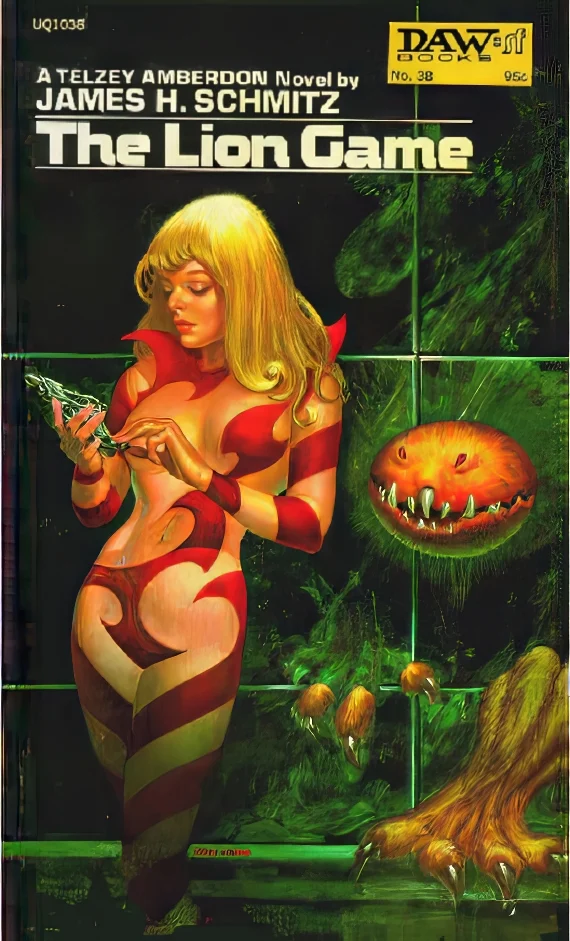
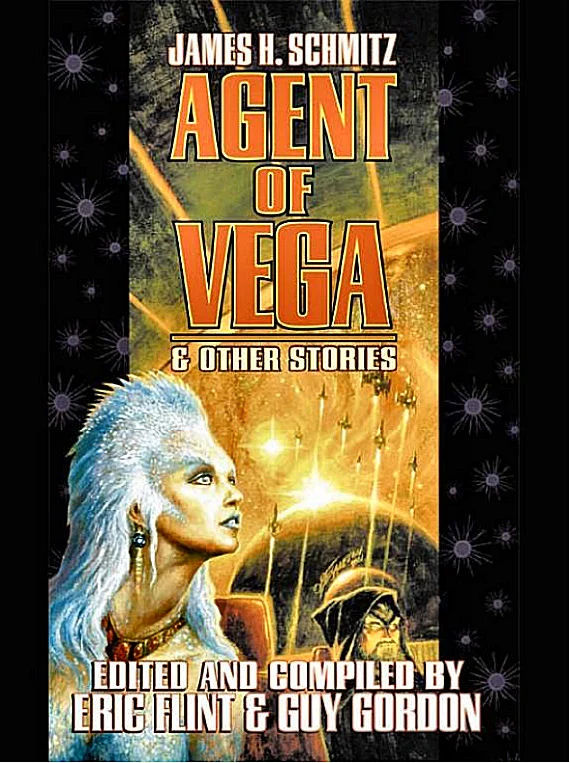
The image in Figure 3 is of Telzey Amberdon, and appears to contradict my statement that Schmitz’s female protagonists aren’t seductive; unfortunately, Kelly Freas knew that most paperback SF was bought by young men, and the purpose of a cover image is to sell that paperback, so… what can you do? In reality, Telzey is a 15-year-old genius in her second year of law school. The animal in the right-side of the picture is a psi-beast that can teleport to where a victim is, kill the victim, and teleport out without leaving a clue. So the book is a science-fiction mystery/action book. Here’s what’s special about Schmitz’s writing, from author Mercedes Lackey (in the introduction to the Baen Books publication of Agent of Vega (Figure 4): “Here was everything I had been looking for—exotic settings, thrills, adventure, heroines who were just as resourceful and brave as the heroes, and something more. There was a magic in the words, but there was more than that. It was imagination.” Lackey goes on to describe the epiphany she received from that book—the idea that these stories were written by people, and that she herself could become one of those people. Like most epiphanies, it changed her life. Of course, she was way ahead of me—although the first Schmitz story I remember was “The Second Day of Summer,” which I had probably read about 1960, I’d been reading SF voraciously since I was about 6—I’ve detailed elsewhere about reading the boys’ comic strip “Dan Dare, Pilot of the Future” in England in the early 1950s—but it took me many more years to realize that all these wonderful stories were written by living people. Some people take a while to catch on, I guess.
Where Schmitz’s type of space opera succeeds and where Star Wars only occasionally succeeds, is where it concentrates on human characters—even the alien ones that are comprehensible—motives, needs, aspirations, etc.—to humans. People remember the Star Wars characters that are memorable more than the technology or the make up of the Galactic Senate; there, the “sensawunda” deals with human motivations—will Han and Leia get together? What does “It is The Way” mean to Grogu? And so on. Here’s where the space opera Schmitz wrote gets light-years ahead of star Wars, if you’ll pardon the expression. Our sense of wonder is sparked not by the technology she uses, but by how and when Telzey is able to communicate telepathically with an alien, and why she is targeted by other groups of people and aliens. We care about Trigger’s attempts to communicate with the plasmoids she dislikes so much, and her relationship with Brule, her “hot stuff” boyfriend. Schmitz makes you care about the characters and their situations, and the SFnal stuff, like ESP (“Psi”) powers is part of the story, but not necessarily the most interesting part. Not that there aren’t space battles and the like. Space opera, from back to E.E. “Doc” Smith up to the modern day, hasn’t changed that part.
The part about Schmitz’s stories that, starting with the aforementioned “Second Day of Summer” seem to keep me reading is that they’re meticulously crafted. From the shortest “Gotcha!” type short, like “An Incident on Route 12” to full-length novels like The Witches of Karres (often cited as Schmitz’s best work, though some people may be triggered by something in it.). The best part for me (besides the ESP stuff—I’m a sucker for a good ESP novel or story) is that there is no attempt at “message”; no axes to grind, no flaws in our civilization to expose, no railing at the unfairness of life—he just wrote a good, interesting and usually exciting “sensawunda” tale that kept you entertained. We’ve been reading a lot of SF written before 1990—even going back to the ‘20s and ‘30s—and for me, that’s what’s missing from much of today’s fiction, whether mainstream or SF. If there are messages, they’re minor or even hidden. The older SF writers weren’t trying to tell you anything, they were just trying to entertain you. (Some writers, like Robert A. Heinlein, couldn’t help being didactic—it was a part of their character; nonetheless, they did their best to be entertaining while they taught you or lectured you. But the message wasn’t the whole point of the story, it was just a part of it.)
Again, pretty much all of James H. Schmitz’s fiction is available on Amazon as e-fiction, but if you just have to have the paperback, those too are available on Amazon, or eBay, or ABEbooks or elsewhere. All you have to do is look.
NOTE: This column is in no way written, edited, proofed or composed by AI, though some of my photo editing software uses it in some capacity. This is a human column and will remain so. My owner insists that I say this; isn’t that just like a human? (Just kidding. It’s still me.)
Please drop me a word or two about this column, and what you think. I’m on Facebook, or you could email me (stevefah at hotmail dot com).Did I do well? Did I mess up, or miss something obvious? Let me know! My opinion is, as always, my own, and doesn’t necessarily reflect the views of Amazing Stories or its owner, editor, publisher or other columnists. See you next time!

Steve has been an active fan since the 1970s, when he founded the Palouse Empire Science Fiction Association (PESFA) and the more-or-less late MosCon in Pullman, WA and Moscow, ID, though he started reading SF/F in the early-to-mid 1950s, when he was just a sprat. He moved to Canada in 1985 and quickly became involved with chairing or helping run Canadian cons, including ConText (’89 and ’81) and VCON. As a fan, he’s published a Hugo-nominated (one nomination) fanzine, New Venture, and he’s founded two writing groups (Writers’ Bloc and Writers of the Lost, Ink). He’s emceed and auctioned art at many West Coast and Northwest conventions including one Westercon. As a writer, he’s published a couple of books and a number of short stories (including one in Compostella [Tesseracts 20], and has collaborated with his two-time Aurora-winning wife Lynne Taylor Fahnestalk on a number of art projects. As of this writing he’s the proofreader for R. Graeme Cameron’s Polar Borealis and Rhea Rose’s Polar Starlight publications. He’s been writing for Amazing Stories off and on since the early 1980s. His column can be found on Amazing Stories most Fridays.