100 years of Amazing stories and the Pulitzer Prize for a Genre Novel.
When the official 100th birthday of Amazing Stories hit in April, we celebrated in style here in San Diego.
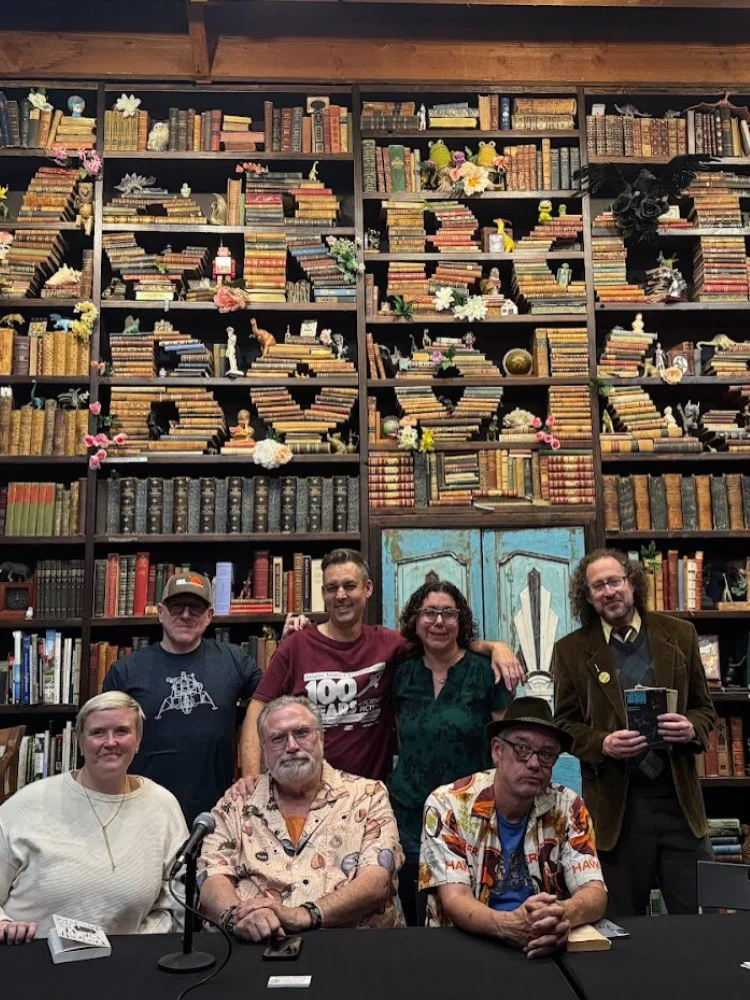
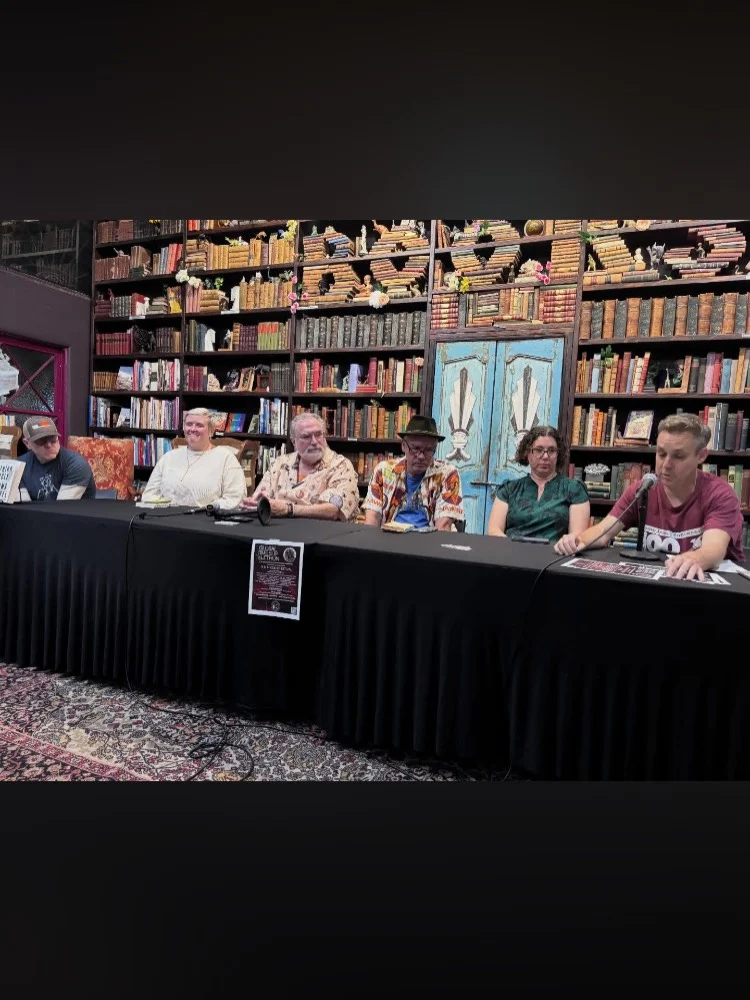
Philip Fracassi, me, KC Grifant, Gideon Marcus, Jac Jemc, Jonathan Maberry, and Cody Goodfellow.
Far from Gernsbeck’s office at 53 Park Place in New York City, the magazine created in that humble building (still standing) was a window to the universe. As we gathered at Verbatim Books in San Diego we talked at length about those humble beginnings. It would be a few more years before the term science fiction became a thing, but the seed was planted in the opening essay of that first April 1926 issue of Amazing Stories. Scientific Fiction, as he called it. The issue was filled with reprints from Verne and Wells. A proof of concept, a signal to the world that this was different.

53 Park Place Today – Go visit!
¨There is the usual fiction magazine, the love story and the sex-appeal type of magazine, the adventure type, and so on, but a magazine of “Scientifiction” is a pioneer in its field in America.
Thus, genre fiction as a movement began. I am not sure horror had anything as clearly defined, but for a moment, let’s see the fantastic tales of SF, Fantasy, and horror as one tradition. As a reader, being a part of this tradition in many ways helped save my life and certainly gave it direction that I credit for making me who I am. I’m not even talking about the writing part.
When I was a young boy, there was a copy of Lucky Starr and the Rings of Saturn written by Paul French (Issac Asimov). This was a juvenile, but I was committed to reading it. Despite learning disabilities that felt crippling. I was hooked. This was an SF story I didn’t have on screen, and there were never enough of those for me. Eventually, it was at a local used bookstore, Caveat Emptor, where I found a copy of Richard Matheson’s Three Steps from the Sun. The reason I picked up this book on that day was magical. I recognized his name on the spine of books on the shelf from episodes of Star Trek and The Twilight Zone. It was at that moment that it hit me. Science fiction, was not just stories, it was also the people who made it.
I am far from a minority who believes that SF, horror, and weird fiction of all kinds helped shape who they are as people. In the horror community, we talk about hanging out with the Halloween People, but the bottom line is that we are different. We think differently. We see the world differently. I think that is why I got into punk rock and metal. That is why I became an activist, a vegan, drug-free, all the things that make me feel good about the person I am.
One reason why I study and teach the history of the genre is that I think it is important. As important as we think the genre is, in literature circles for most of our history, the ruling class of literature didn’t see the importance of speculative storytelling. Books like Stand on Zanzibar won the Hugo award for best novel, but it is not considered a masterpiece of literature, rather it is thought of as a masterpiece of Science Fiction. Brunner’s book in hindsight, foresaw our future, and certainly is as worthy as many Pulitzer prize-winning novels. It didn’t stand a chance in 1969. It is both, but most don’t see it that way.
No offense to House Made of Dawn, and the author who won the 1969 award N. Scott Momaday. I admit I never heard of his novel until I started researching this article. Although now I want to read it.
In any given year, we have awards for romance fiction, crime, horror, and Science Fiction. Horror has the Splatterpunk award, the International Horror Guild. and the Stoker award. SF has the World Fantasy Award, the Nebula, and the Hugo. Shirley Jackson and Philip K. Dick have awards in their name. The announcement in early May that Angel Down won the Pulitzer Prize was one of the most beautiful things to happen to genre fiction at that time.
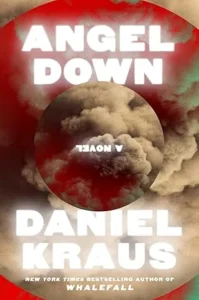
The fact that a horror novel won the Pulitzer Prize shocked the genre world, and to be honest, the entire field felt like they won. This wasn’t a Stephen King or Dean Koontz lifetime achievement award; it was an award for an excellent writer in the salt mines.
Funny thing, when I ranked my favorite new novels last year, I had Angel Down as the 7th spot on my list. Although on my year in review podcast, I said it was probably the “best” novel I read, but not my personal favorite. Luminous by Silvia Park was my top read, and it is important to point out that no matter how good that book is, I doubt it would have been considered for the Pulitzer.
Maybe, but I didn’t expect Angel Down to get the attention either. Stoker award for sure, and Shirley Jackson, World Fantasy award. I expected it to win all those. Still If I had a vote it would be the novel by Silvia Park, Luminous. It is a novel set in a near future, united Korea, which might just seem like another robot novel but it is a story about humanity and the ever-growing dangers of our relationship to technology. It is a family story, and Park does a fantastic job introducing the unit at the center of this tale. Jun and Morgan are siblings who have not spoken in far too long. Morgan has fallen into the family business; their father designed robots, and now she does. Growing up, they had early robots in their family, in Yoyo, whom they loved but who disappeared. Morgan’s story opens when a child-like robot in her building goes missing. When the Robot-crimes unit comes out to investigate her brother, Jun shows up. It is not just that Jun was Morgan’s sister when they last saw each other; Jun nearly died in the war and was transhuman as much as gender.
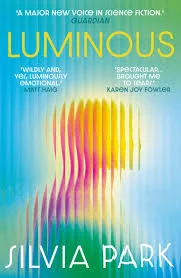
Luminous is a deeply thoughtful science fiction novel, with grounded and fully realized characters. The setting is powerful, the themes are rich with emotional depth. Not to take away from the book that won the big prize but Luminous was a novel that affected me more deeply. The themes and the story hung around like a ghost. Ken Liu’s powerful Techno Thriller All that We See or Seem affected how I felt about the future of AI, and the themes techno-spiritual crash haunted me long after I shut the book.. Cody Goodfellow‘s pulp superhero story New Tomorrow blew my mind and might be the most fun I had reading all year. The horror novel I consider the best of the year was the super unique Model Home by Rivers Solomon that breathed fresh air in the walls of a haunted house.
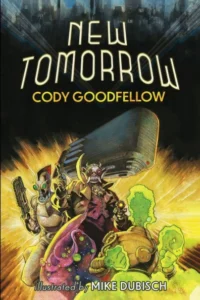
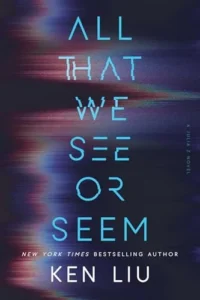
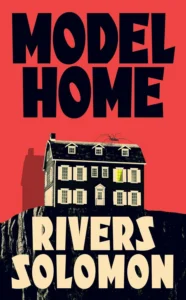
None of that is to take away from Angel Down or Daniel Kraus and his big win. My jaw dropped when I got the news. I think he deserves it. A beautifully written novel, about the unending tragedy of war, at this moment. Yeah, it hits differently. I just hope it opens the floodgates for other genre works to get considered in the future. I believe it will. This is a big deal. 100 years and what better way to honor that anniversary than Daniel Kraus winning the Pulitzer Prize.

David Agranoff Grew up in Bloomington, Indiana hanging in the park that inspired this novel. His future wife worked at the Spoon serving the real-life Electric Fred. They have two of his notebooks and a house full of rescued animals. David is a novelist, screenwriter and a Horror and Science Fiction critic. He is the Splatterpunk and Wonderland book award nominated author of 11 books including the novels the WW II Vampire novel – The Last Night to Kill Nazis, and the science fiction novel Goddamn Killing Machines from CLASH BOOKS, The Cli-fi novel Ring of Fire, Punk Rock Ghost Story He co-wrote a novel Nightmare City (with Anthony Trevino) that he likes to pitch as The Wire if Clive Barker and Philip K Dick were on the writing staff. As a critic he has written more than a thousand book reviews on his blog Postcards from a Dying World which has recently become a podcast, featuring interviews with award-winning and bestselling authors such Stephen Graham Jones, Paul Tremblay, Alma Katsu and Josh Malerman. For the last five years David has co-hosted the Dickheads podcast, a deep-dive into the work of Philip K. Dick reviewing his novels in publication order as well as the history of Science Fiction. David’s non-fiction essays have appeared on Tor.com, NeoText and Cemetery Dance. He just finished writing a book, Unfinished PKD on the unpublished fragments and outlines of Philip K. Dick. He lives in San Diego where you can find him hooping in pick-up games and taking too many threes.