OBIR: Occasional Biased and Ignorant Reviews reflecting this reader’s opinion.

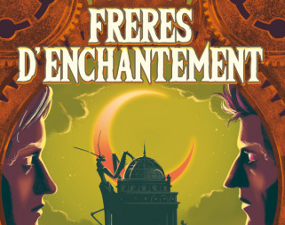
ON SPEC MAGAZINE issue #133, Vol. 35 No. 3.
Publisher: The Copper Pig Writer’s Society.
Managing Editor and Art Director: Diane L. Walton.
Issue Designer: Jerry LePage. Poetry Editor: Colleen Anderson.
Fiction Editors: Barb Galler-Smith, Virginia O’Dine, Constantine Kaoukakis, Susan MacGregor, Ann Marston, Krystle McGraith, A.J. Wells, Diane L. Walton, Dan Gyoba, Ethan Zou, Alyssa Kulchisky, William Thompson, Lareina Abbott, Cheryl Merkel, Jade Mah-Vierling, Asley Alton, Jessica Zdril, Thomas Schwarz, Lorina Stephens, Kathleen Phul and Matthew Stobie Jackman
Cover Art: Back Allley Bots – by Lynne Taylor Fahnestalk & Steve Fahnestalk.
FICTION:
The Bag of Holding – by Liz Westbrook-Trenholm
Premise:
A beggar finds an abandoned leather bag. This could be a stroke of luck, or not.
Review:
This story could be titled “Metaphor Alley,” which is appropriate since much of the action takes place in alleyways, corridors and hidden passages. At one level it is the plight of a down-on-their-luck individual in a medieval world steeped in poverty and cruelty. At another, it portrays the problems of any do-gooder in a society where poverty and cruelty are taken for granted as being ‘normal.’ We know of several such societies today.
In other words, this fantasy is really about modern reality. It has all the trappings of good fiction, in that the main characters are trapped in an impossible (read ‘magical’) situation, one that through assorted futile efforts slowly reveals the complexity of the characters and their inevitable interaction. This allows the reader to grow into the story as the story grows. Attention to detail and a wry wit keep both events and characters entertaining. Despite its serious underpinnings this story is fun to read.
Even better, the story offers a solution to the problems which confront us today. Don’t want to give too much away, but it has to do with a needful paradigm shift among the population at large. It could come about via some charismatic “saviour” of a politician—unlikely—but could just as easily be brought about by human nature in general. Rather hopeful, that.
The Love Song of House and Lake – by Gilian Secord
Premise:
City boys shouldn’t spend all their time at the cottage.
Review:
This, too, is a fairy tale, but more mystical than the previous story. Perhaps more metaphorical, too. So much so, I’m at a loss to interpret its message. Probably because I tend to be too literal minded in the face of the metaphysical. It is about longing, and seduction, and transformation. It is not a “be careful what you wish for” story. Perhaps it implies one should accept being an adult once one finally grows up. ”You can’t go home again.” That sort of thing.
At any rate it doesn’t strike me as dealing with the real world so much as offering an escape from it. The ending will impact some people as liberating. Others, as merely exchanging one form of prison for another. Perhaps the ultimate message of the story is that life is what you make it. In that sense, a positive point of view which matches its overall pleasant, dreamlike ambience. A fantasy vignette to my mind.
Syrinx – (poem) by Deborah Herman
Premise:
You can never trust a Satyr.
Review:
A thoroughly classical paean to the great god Pan, who was very fond of seducing nymphs, Naiads and Maenads. Well, he lived in Arcadia after all, so it wasn’t as if there were a wide variety of women such as what one might find in a modern nightclub. In this particular case he pursues the chaste Naiad Syrinx from Mount Lycaeum to the river Ladon. There she transforms into a plant, whereupon he inadvertently gifts her a form of immortality.
Actually, it’s a refreshingly original paean to Syrinx who, while Pan is said to have died in the time of Plutarch (according to Plutarch), lives on even in these modern times. Her transformation was painful, but there is something to be said for immortality. I dare say there are more people alive today who raise a glass to her, because of their personal connection with her, than to the memory of goatish Pan. I was happy to read this poem. A reminder that some classical beliefs (and themes) remain a living influence on modern times.
When the Stars Threw Down Their Spears – by John Park
Premise:
Just how alien are aliens?
Review:
Never mind the prime directive. An alien assault on Earth might have nothing to do with us. Something more important than the survival of the human race could be at stake. But what? And why? These and other concepts Poole and Meyer argue about in their mini submersible while on a mission to recover an alien artifact which may or may not explain what is going on.
Does the human race have a future? Life on Earth? Their own personal selves? Their ongoing debate is motivated by the deepest fears imaginable. Hard to be objective when the unknown is so unknown that fear of the unknown overrides all other emotions. All the same, they get on with their job. What else can they do?
What I like about this story is that it takes the hoary old trope of an alien invasion quickly unifying the human race and transforms it into an infinite confusion of impossible choices none of which appear to be the key to solving the problem at hand. A much more realistic point of view. Our fate is left up to the fates. Simple as that. Not necessarily cause for despair. Just remember that nothing is guaranteed. Not even defeat.
The Superposition of Ramen – by Jed Looker
Premise:
Can a pack of Ramen interact with a numbers station to solve our greatest mystery?
Review:
Nerds would like to think so. Numbers stations, for those unfamiliar with the concept, are a genuine phenomenon. Of unknown backing, they broadcast code continuously. One of the more infamous, as best I can recall, has been broadcasting for decades out of Russia, but they can be found all over the world. It is assumed they are operated by intelligence organizations. Conspiracy theorists love them. So far as is known, nobody has ever cracked the codes. They could be meaningless, but if so, to what purpose?
In this story contact is established with a time traveling entity who informs us of the circumstances which will lead to humanity gaining a kind of immortality. It involves a hobbyist whose obsession is monitoring numbers stations and a pack of Ramen noodles he keeps in his cupboard. The fate of the human race depends on their interaction. Unfortunately, something akin to a prime directive prevents the entity from naming the individual, who has yet to be introduced to the taste of Ramen noodles. Someone has to ensure this comes about, but who?
This is a delightfully offbeat story placing an ongoing mundane mystery into the realm of science fiction extrapolation. I find it both amusing and entertaining, not to mention highly original. Science fiction at its best.
The Serene Hospice of the Sisterhood of Baba Yaga – by Lorina Stephens
Premise:
What if the Baba Yaga sisters were into palliative care?
Review:
I am vaguely aware of the legend, having seen photos of an award-winning costume of a house with chicken legs. Truth is everything I know about the legend is what is stated in this story. I gather it offers an unusual interpretation of the three sisters.
It’s basically a story about end-of-life choices. I’m not a young man with my whole life ahead of me. I’m 74. It’s why I’m impatient to get things done. I may not have much time. I literally contemplate the end of my life almost every single day. Not a question of being morbid. But of considering my options when the time comes. In general, I’d like to go quietly and peacefully. It’s mostly the luck of the draw, of course, but sometimes it can be arranged. Of course, I’d like to go on reading and writing for another 20 or 30 years, but I might not even have that many days ahead of me.
The thing is I want to be prepared and at peace with myself in advance of whatever happens. This story is clever and amusing, and something of a dig at people trying not to let AI run them out of business, but more importantly, it offers a glimpse of an acceptance of death as a part of life, as something natural and even comforting. This could well prove to be the most influential story in this issue. It reaffirms the trend in my thoughts about death. I consider it a positive and uplifting story.
Others may find it horrifying. I don’t. I quite like it.
Besides, it has such a great title.
When I dated a Planet Architect – (poem) by Angela Caravan
Premise:
Is making a planet to order a good idea?
Review:
It has to serve every living thing. Rather selfish to think it’s made just for us.
An Unsparing Harvest – by Stefani Cooke
Premise:
What is the worst thing you can imagine about a body farm?
Review:
This is where human cadavers are left to rot naturally. A hist of information is to be gained, such as when the maggots first appear. Information of great use to coroners trying to determine time of death. Such farms exist. Too creepy for most people to think about.
But what if more than worms and blow flies are involved? A creature concerned with cultivating the crop, concerned with the quality of “farm workers,” a beast immune to outside influence? A supernatural determined to function as the farmer?
Definitely a horror story. Not for the squeamish. Lesson to be learned? If you’re a medical intern, don’t volunteer to serve on a body farm. Playing skip rope with intestines in the morgue is one thing, for dark humour eases inhibitions. Typical student prank. But a body farm is no laughing matter. Especially when the supernatural is involved. In theory, an “impossible” story, but if you accept the premise, actually quite chilling. Unnerving.
The Years Between the Stars – by Al Onia
Premise:
What if discovering a habitable planet turns out to be a bad idea?
Review:
Kevan reached Goldilocks and found it rich and fertile and harmless. He transmitted his report to Earth and then entered cryo-sleep to go home. He expected to be greeted as a hero on his return, a colony undoubtedly already established on Goldilocks by then.
Such is the dream underlying the concept of humanity spreading to the stars. Still a vivid dream to many. Problem is, there is too much wishful thinking in such dreams. Even for such a world as Mars, we need to know a heck of a lot more before we can safely establish a research colony. A thriving Mars, economically independent of Earth, is centuries away. So, too, other worlds as a solution to Earth’s problems. Other than gathering a bit more information, Elon Musk’s dream is a dead end.
I saw Sputnik. I watched the Lunar walks live on TV. I’d really like to see humans walk about on Mars, however briefly. But I won’t live long enough to witness colonies on Mars. I doubt anyone alive today will either. Robots mining asteroids, maybe. That’s about it.
When the movie 2001 came out I recall an interview where Arthur C. Clarke stated he thought the film was much too conservative, that by the time 2001 rolled around space travel would be much more advanced than what the movie showed. Again, wishful thinking. Even scientists are prone to it. They forget about bean counters. And conspiracy theorists. I’ve met people who don’t believe the space station, spacecraft or even satellites exist. It’s all a hoax, they insist.
The sad truth is, even if we develop the capacity to reach worlds beyond our solar system, for any number of reasons we might choose not to. And, as this story suggests, that might be a good idea. To my way of thinking, a genuine horror story. I’d like us to go, but I worry about the consequences.
Would I volunteer to go to Mars? No. But I’d be happy to watch live broadcasts.
Les Guérisseurs – by Jonathan Simmons
Premise:
What if certain Canadian military medics in WWII had a gift inherited from their Mi’kmaq nepitegetjig ancestors, a gift they passed on to their descendants?
Review:
A charming story. Not about indigenous belief in opposition to modern medical science, but rather the two complimenting each other. It emphasises the role of healing as something beyond mere chemicals and formulas. It would be nice to believe such is possible.
Where I draw the line is folklore instead of modern science. Sometimes it is useful. Often, it can be fatal. Fanatics don’t care. We seem to be retreating to a medieval mindset where diphtheria, typhus, the measles and polio will return because only proper diet and prayers are necessary. No need for vaccines or proper sanitation. No need for laws governing food quality. Kids just need to tough it out. Well, they won’t. Many will die. But that seems to be what so many parents want nowadays. Seems they have the right to condemn their kids to death. Oh, well. Who am I to oppose freedom of choice? I feel sorry for the kids, though.
I recognise this story as charming and nostalgic, a poignant feel-good story. Apparently, the author’s first piece of fiction. In which case I have to say, exceptionally well done. But in light of these modern backward-trending times, I can’t help but feel it is a little out of place. Makes the story all the more poignant.
Recent Notifications From SmarterFridge 8000 – (Poem) by Elis Montgomery
Premise:
Has the AI in your fridge become too sentient?
Review:
There have been a number of stories and poems about sentient appliances these days. Variations on conversations with Alexa. Trust me, this particular poem is uniquely original and quite hilarious. It will make you smile.
Some are Rather Quiet and Some are Really Loud – by Kristopher Galbraith
Premise:
About that old engineering tradition of listening to what the machinery is saying…
Review:
Mechanics can often tell how well an engine is running just by listening to it. In this story the concept is extended to every aspect of a spaceship, to the point where a ship that is silent in port because it has been shut down is viewed as a dead ship. A noisy ship, it seems, is a happy ship, providing the noises are appropriate to that condition. No wonder the crew is all ears even when they are asleep.
But, what if noises can be induced? How will the crew respond?
This is good, old-fashioned space opera with a surprise ending. Enjoyed it, I did.
Two Voices, One Song – by David Jon Fuller
Premise:
What is the worst possible thing you could run into while hiking in Iceland?
Review:
Yep, you guessed it. And what could possibly save you? Lessons from traditional folklore, if you happen to know them. Alas, the ignorance of your fellow hikers is a bit of a hindrance. Not to mention their tendency to panic. But stay calm. Confront the menace. Appeal to its nostalgia. With a bit of luck, you might just survive.
This story brings Mythic Iceland vividly to life. A real treat.
A Little Meteor – by David Lee Zweifler
Premise:
How much trouble can a little meteor accomplish?
Review:
Quite a bit, it seems. How deft can a little story only 11 lines long be? Perfectly complete within itself. Sometimes less is much more.
NON-FICTION:
“Thirty-Five Wonderful Years” – Editorial – by Diane L. Walton
Diane writes: “When we started On Spec, we were filling a niche. In the 1980s, Canadian writers in our genre had very few opportunities to get their work published in their own country. And small press publishing was in its infancy. So much has changed since then…”
“Earlier this year, I announced that I’d be retiring… my final issue as Managing Editor would be VOL 35 No. 4. After much soul-searching, and discussion with the rest of our editorial staff, the Board of the Copper Pig Writer’s Society has made the difficult decision to end publication of On Spec with that issue.”
This, then, is the penultimate issue. There will be but one more.
This Fierce Historical Anguish: – An Interview with John Park – by Roberta Laurie
John has always preferred John Wyndam over Robert Heinlein, and Asimov not at all. “When the Stars Threw Down Their Spears” is by design and nature about characters caught up in an ambiguous hard-to-define situation. Entangled in real life. He points out someone described this story as a “great first chapter” for a novel, but he can’t see that. He seems to feel it is as complete as it needs to be. As he says, “I’m not particularly interested in clear-cut conflicts.” He’s more intrigued by human anguish than hard science. Arguably more realistic than Heinlein or Asimov, when it comes to life as actually lived by most people.
Comic & Bot: “New Robot Blues” & “Jet Pack Jerry”
– By Lynne Taylor Fahnestalk and Steve Fahnestalk.
Great fun, as always.
CONCLUSION:
You can’t subscribe. There’s only one more issue to come. But, judging from this issue, the magazine’s standards are being maintained to the last. It will be sorely missed.
Check it out at: < On Spec #133 >