Today’s The Dailies features an article about the actor Matthew McConoughey (Interstellar, Deadpool & Wolverine, Reign of Fire, Walking On the Moon) has taken the previously unusual step of Trademarking his name, voice, likeness, gestures, etc. as a hedge against it being used in deepfakes and other AI-generated uses.
Including obtaining “word mark”s for “motions”, which is an unusual approach:
In one of his applications, it states:
“The mark is a motion mark. The mark consists of the actor Matthew McConaughey with beige face and hands, brown hair and facial hair, white teeth, and black eyelashes, wearing a white button down shirt, silver necklace, silver watch, and silver rings. He is standing outdoors on a porch with brown wooden slats and a silver metal fence, with green trees and bushes, tan sand, white clouds, blue sea, and blue sky in the background. The motion consists of the actor standing and facing forward with his arms raised and palms open. Next, his arms open further wider. Then he glances to the side and places one hand on his hip and lowers the other hand out of the frame, with his body positioned at an angle, and turns his face forward. The duration of the motion is approximately 7 seconds.” It is accompanied by a video clip.
There are other granted applications for additional “motion marks”.
The general concept seems to be one of taking motions and gestures that are commonly performed by the actor and make them protected when associated with his likeness.
This relatively new application of trademark law has been challenged in courts (is a movement or gesture “functional” or “distinctive”?). Such expansions in the face of evolving technologies (and the unanticipated benefits and problems they introduce – which is one place that science fiction ought to be a useful tool) are not uncommon and things often take decades to become fully resolved.
However, the fact that this type of Trademark exists suggests that the law is making attempts to deal with the new reality, and that means that there may be additional types of protections that could become available to authors and artists.
Here’s one possibility:
Feed all of your works into a LLM and ask it to identify common turns of phrase that are unique to your works. (Everyone has some – it’s what we often refer to as “style”, or in cases such as myself, a lack of one….).
If anything turns up, it might become the basis for some Trademark protections.
(My reasoning is that if physical gestures embodied in a particular person can receive Trademark protections, a commonly used turn of phrase by an author can be viewed in the same manner. That’s theory of course and, while IANAL, I have had a fair amount of success over the years in getting some pretty unusual IP approved.)
Then, of course, there’s Trademarking your own name. Ellison did it: “Printed matter, namely, books and magazine columns featuring general fiction and non-fiction about the subjects of popular culture, penology, social commentary, film and television criticism, theory of creative writing, anecdotal and biographical material, literary anecdotes, science fiction, fantasy, horror and the supernatural, American authors, radio, television, entertainment and book reviews.”
So did Agatha Christie: “printed matter, namely, magazines, newsletters, and newspapers featuring information of interest to mystery readers, a series of fiction books; [ bookmarks; and stationery ]”,
J.K. Rowling (boo!) “Entertainment services in the nature of an on-line interactive website featuring information specifically related to books and movies in the nature of news, games, and activities; providing entertainment information relating to books, movies, games and toys, online trivia about books, movies, games and toys, online games and online contests provided by means of global and local area computer networks” (she’s got multiples under different classes).
Sharon Lee and the late Steven Miller went a different route and trademarked their fictional universe’s name – the Liaden Universe ®: “Series of science fiction books; magazine stories, featured in publications of others, in the field of science fiction”, which makes sense if only because the majority of their works were written in that universe. Series writers might perhaps take a cue, though I would be much more expansive on the description (be as broad as possible; the USPTO’s examiner will knock you back with suggested changes during the inevitable “Office Actions”.
and others as well.
Registering a Trademark, as McConoughey has, really serves two purposes: the knowledge that something is protected by IP law can be a deterrent and, if infringement is caught, it can result in better outcomes.
But realize that simply having a mark is not a perfect shield. Among other things, you not only have to identify the source of infringing content, you have to be able to identify who is responsible. And THEN you have to bring suit…which can be an expensive and long-drawn out process.
Such applications are also not cut and tried applications. As mentioned, this is a new expansion of Trademark concepts, so paying for an attorney (an IP attorney) to write one up for you is probably going to cost more than a run of the mill Trademark. If you are hiring someone, your associated costs could be as much as 10k, though it is more likely to be in the 3 to 5k range. (Or you might have a friend with some experience who’d be willing to help you out.)
I’ll also remind everyone that as the recent Anthropic settlement has revealed, while copyright (not trademark) is conferred upon creation, REGISTRATION of that copyright is required to receive the full benefits of legal action.
As we’ve seen, the mere presence of IP protection does not prevent infringement.
As we have also seen, new technologies open up new opportunities not just for creators but for bad actors as well. Perhaps it’s time to think a bit more about availing ourselves of these new developments in ways that benefit creators.
(Yes, I am aware that I recommended AI above. It is a tool. Use that tool in ways it was meant to be used and benefit yourself.)
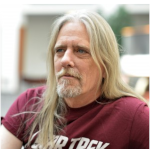
Steve Davidson is the publisher of Amazing Stories.
Steve has been a passionate fan of science fiction since the mid-60s, before he even knew what it was called.