
STORY HORDER
As a child, I was a story horder. I couldn’t get enough of them. I was very fortunate to have parents who read to me, and looking back, they were saints in this regard. I was voracious.I always wanted more, and I wanted my favorites again and again.
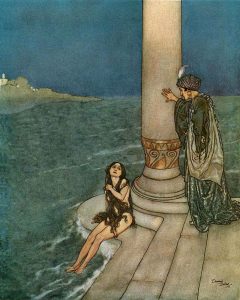
The original story of The Little Mermaid and its illustrations enthralled me. I can still feel the excitement and the magic of reading that story. I’d get lost in it. What a gift my parents gave me by reading to me, but I must have driven them mad.
I was the same with music. I became obsessed with songs. I needed to hear them over and over again, so that I could memorize them–somehow making them a part of me. “How Much Is That Doggie In the Window?” was one of my early obsessions. We would sing the song inserting the names of every family member I could think of in place of “that doggie.” It was no doubt a bedtime stalling technique, but it was also delightful. I recall a lot of giggling, thinking of my family members in the pet store window.
I suspect my parents were relieved when I finally learned to read and learn my own songs, but it was short lived. They then had to endure my reading and singing to them endlessly.
WE’RE WIRED FOR STORIES
It turns out that my parents gave me a bigger gift than I thought. According to the article, “What Listening to Stories Does to Our Brains,” we are actually wired for stories. Telling them and and listening to them lights up our brains in powerful ways.
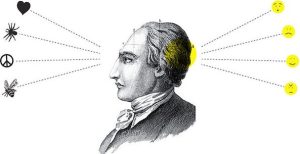 Researchers in Spain say that, “Not only are the language processing parts in our brain activated, but any other area in our brain, that we would use when experiencing the events of the story are too.” In addition, the brain of the person listening and the brain of the person sharing a story can become synchronized in the process of storytelling.
You can imagine the ramifications of these brain responses, and likely one of the reasons we fall in love with comedians, musicians, actors and writers–they’re storytellers lighting up our brains and helping us feel what they are describing far more deeply than we realize.
LIFE AND STORYTELLING
There are real world applications for this knowledge, and the article suggests a few:
–To bring others on board with your idea, tell them a story (Writers – Think synopsis and project pitiches!).
“According to Uri Hasson from Princeton, a story is the only way to activate parts in the brain so that a listener turns the story into their own idea and experience.
The next time you struggle with getting people on board with your projects and ideas, simply tell them a story, where the outcome is that doing what you had in mind, is the best thing to do. According to Princeton researcher Hasson, storytelling is the only way to plant ideas into other people’s minds.”
–Create greater impact and credibility (Bloggers!).
“…ask for quotes from the top folks in the industry or simply find great passages they [have] written online. It’s a great way to add credibility and at the same time, tell a story.”
–Simple is better.
“Using simple language as well as a low complexity is the best way to activate the brain regions that make us truly relate to the situation and happenings in the story.”
 Some good advice, don’t you think? When I consider these suggestions, it makes me think why the phenomenon of LOL Cats and the like on the Internet are so successful. These little vignettes are engaging our brains with a visual story, using simple words to invite us into a common experience with which we can identify. Add a little humor and we’re hooked!
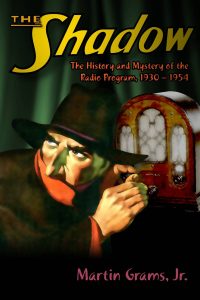
It may also be why story podcasts like Lightspeed, and radio shows like This American Life and Snap Judgement are more popular as they become so easy to access online. They’re the modern day version of sitting around the old RCA radio listening to The Lone Ranger and The Shadow. Mostly what I come away with this article, is that to be engaging as a storytelling, I need to remember to unabashedly share my enthusiasm of the story with my readers. If I’m engaged, they’lI be engaged. Ultimately, what I want for them is the excitement and joy that a great story brought to me as a child and still brings to me to this day.
Happy Stories to you, my friends!
Yours Always,
Note: Thank you to Ginger Hamilton Caudill for the link to the original article; The Shadow cover borrowed from: booksteveslibrary.blogspot.com

FRAN FRIEL is a two-time Bram Stoker Award Finalist and winner of the Black Quill Award. She enjoys life with her husband and her dog by the beach on the Central Coast of California, where she also serves as staff for Alice the cat. You can follow Fran’s latest antics here at Facebook or at Twitter, and Fran Friel’s Yada Feast.






Jack – What a wonderful story! R.L. Stein has enlightened, enlivened and engaged many a young reader. Woohoo, R.L. (and you)!
For me, it was Dr. Seuss, Green Eggs and Ham. I was obsessed, maybe possessed by it. I was determined to be able to read and recite all of his mad and marvelous phrases. They were so evocative to me–I could see and feel it all! I owe so much of my joy of reading and the whimsy in my heart to the good Dr. S.!
And I feel the same way you've described about how wonderful it is when science confirms something you feel in your soul. Btw, that was REALLY beautifully expressed. Thank you!
Happy Reading, Jack!
Fran
Jonathan – I suspect you're a better storyteller than you think. Many writers make storytelling look easy, but so often it is excruciating. I think there are, indeed, some folks who can spin a yarn on the spot, entertaining anyone who will listen, but I also think they're pretty rare. I have a brother like that. Give him a pint, and he's off running. 🙂
I think I know what you mean about wanting to relive that specific events in a story. The idea of no filler is a good one. Writers are very attached to the connective tissue of stories that get them from scene to scene, but the idea of eliminating that filler habit is an interesting one.
I recently read a book on writer, where the author was striving to increase her daily word count dramatically. One of the things she discovered in her quest was the boredom factor. Some scenes were just plain boring to write. She realized this was slowing her down AND if she was bored writing a scene, her readers would likely be bored by them, too. Hence, she no longer writes anything that feels boring to her, and I suspect this includes filler. Incidentally, this change did, in fact, help to increase her word count.
I like your idea, and I believe the author of that how-to book was hitting on this indirectly. I'll keep this in mind, Jonathan. I think it's a very intriguing and important thought. Oh, btw, I do believe, flash fiction accomplishes this feat (well, good flash fiction) in little juicy chunks.
Thanks for keeping me on my toes, Jonathan. I like the way you think!
Hugs from America,
Fran
Fran, thanks for the extended reply!
I suppose there is probably something of a knack to storytelling, like riding a bicycle, and maybe I could suddenly get it one of these days, but so far I haven't got it, and I suspect I'd have to work a lot harder and longer at it in order to have a chance. Writers of fiction rarely seem to suggest that it comes easy, apart from the occasional anecdote of "Oh, it all came to me in a dream and I just wrote it down."
I'm not sure that it's really feasible to get rid of filler from a story, or how the story would feel if you managed to do so. It was just a thought. However, I'm reminded of a couple of quotations:
Alfred Hitchcock: "Drama is life with the dull bits cut out."
Raymond Chandler: "The demand was for constant action; if you stopped to think you were lost. When in doubt have a man come through a door with a gun in his hand. This could get to be pretty silly but somehow it didn't seem to matter."
I would comment that having a man come through a door with a gun in his hand makes for action, but doesn't really fit my image of a key scene that I particularly enjoy rereading—which I suppose typically involves some kind of positive emotion, or revelation, or humour, or an interesting interaction between characters. Perhaps I could even mention the traditional Sense of Wonder.
Hugs from Spain!
Jonathan
Thanks, Doc! So glad to see you.
You (and Mr. King) are so right. It really is quite a magical phenomenon. I've actually had people read my work and swear I'd written something that never appeared in the story itself, however…dahn, dahn, dahn…it was in my mind when I was writing the story. Spooky. 😉
Happy Storytelling, Doc!
Fran
Kindreds souls, we are!
And your son is a very lucky boy to have a story-lovin' mama to share the juice with him! It will inform his entire life. What a gift you're giving him.
My daughter's dad was notorious for skipping pages or editing her books as he went along (to shorten the bedtime ritual). My daughter was never fooled–"Daddy, you missed a page." Me, on the other hand, would fall asleep while I was rocking her and reading–"Mommy, wake-up!" LOL. Good times.
Thanks so much for sharing your story with me, Diane! 🙂
Fran
Oh, yes, I struggle to stay awake sometimes too. Mostly when he lets me sing to him though. That's tough! I have to admit to trying to skip part of the story every once in a while, although sometimes in my defense it was quite by accident! And I would only try it with those that are unbelievably repetitive anyway. But he usually notices. Today, he actually got ahead of himself on a story we hadn't visited in a while and he thought I was the one who'd skipped ahead! LOL
My parents tried to teach me to read by using Hooked on Phonics. It didn't take, and I grew easily bored. But, I always liked it when they read spooky stories to me. So when Goosebumps came along, they bought me all the copies they could, and sat me down to read them. I pretty much learned to read from R.L Stein, and those books are why I love to write and read today. Awesome post, Fran! I love it when science confirms something you feel in your soul.
Great post, Fran!
I was the same way as a kid, although I don't remember my parents reading to me so much. But once I could read on my own I was off in the corner with my nose buried in every spare minute.
Now, my son, 3 years old, is a story hoarder like you were at his age. A new book is the best and must be read 10 times in a row. Older books are revisited often and some books are part of the bedtime ritual and are read every night. Lots of the stories he can "read" to himself, word perfect. He tells himself and us the stories over and over. And it's really a joy to see him so enthusiastic. Sure, it gets a bit tedious reading some stories so many times I could recite them in my sleep. But mostly it's fun and I get to participate in the formation of a small person's love of stories. I have no doubt that we become synchronized while reading. It's very cool! Nice that there's some science behind it!
Nice post, Fran! It's been said before (by Stephen King, for one) that reading a writer's words is the closest we can come to actual telepathy, and I believe that's true. Written words alone can generate feelings of love and hate and everything in between even though the person writing them may be long dead.
I also read a lot as a child, and remain a rereader of fiction. Sadly, however, I don't seem to be a natural storyteller myself. Perhaps it's a knack one can acquire with sufficient hard work, but I feel that it comes easier to others.
I've noticed that I often want to reread a book in order to experience one or more specific scenes that particularly appeal to me; and a story may be viewed as being made up of these key scenes separated by filler. The hypothetical notion arises of a story consisting entirely of key scenes without filler, but I'm not sure that I've ever encountered such a thing.