With only a few dollars to her name and her beloved dog Copper by her side, Selena flees her past in the city to claim her late aunt’s house in the desert town of Quartz Creek. The scorpions and spiders are better than what she left behind.
Because in Quartz Creek, there’s a strange beauty to everything, from the landscape to new friends, and more blue sky than Selena’s ever seen. But something lurks beneath the surface. Like the desert gods and spirits lingering outside Selena’s house at night, keeping watch. Mostly benevolent, says her neighbor Grandma Billy. That doesn’t ease the prickly sense that one of them watches too closely and wants something from Selena she can’t begin to imagine. And when Selena’s search for answers leads her to journal entries that her aunt left behind, she discovers a sinister truth about her new home: It’s the haunting grounds of an ancient god known simply as “Snake-Eater,” who her late aunt made a promise to that remains unfulfilled.
Snake-Eater has taken a liking to Selena, an obsession of sorts that turns sinister. And now that Selena is the new owner of his home, he’s hell-bent on collecting everything he’s owed.
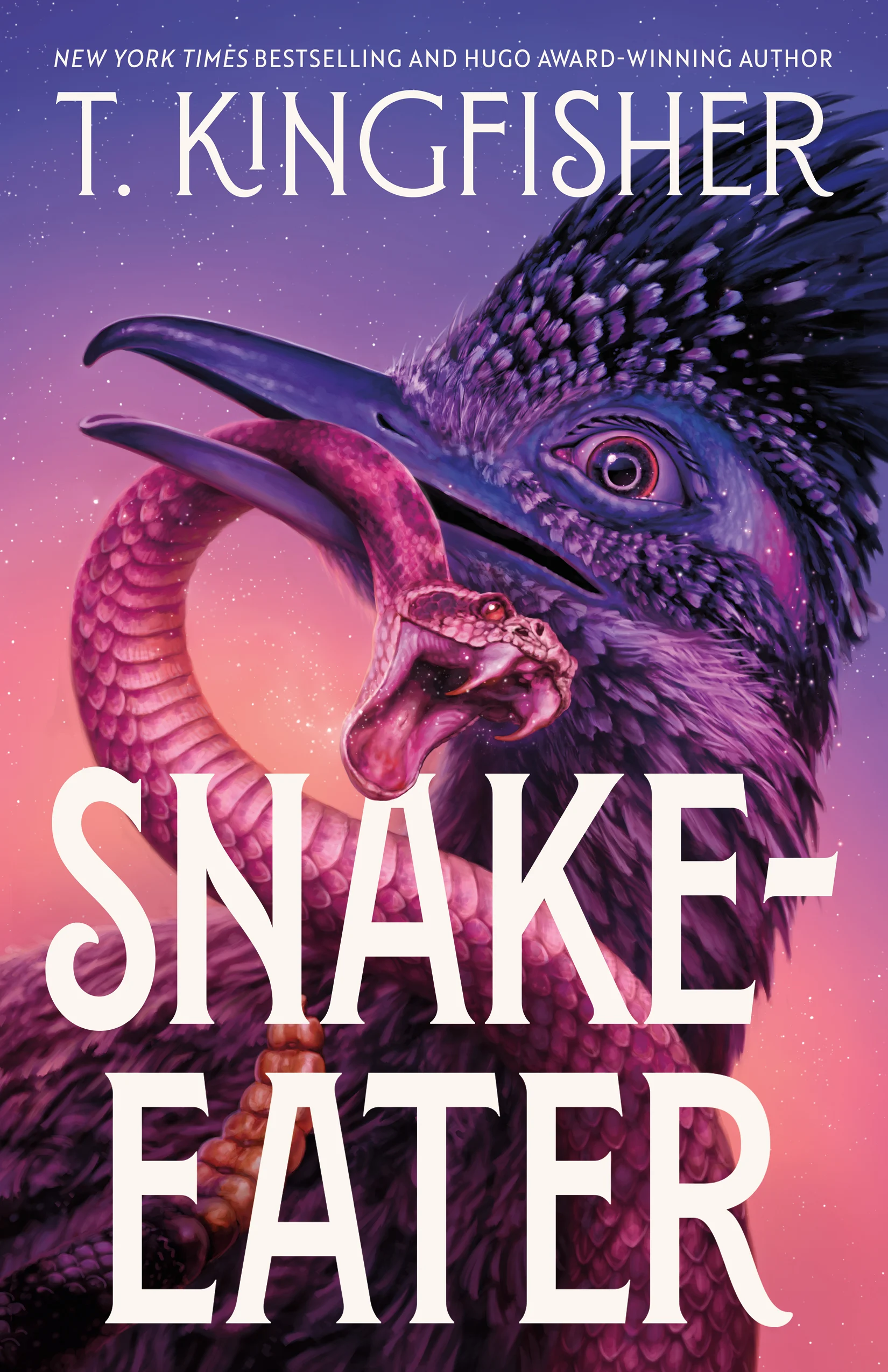
Excerpt from SNAKE-EATER by t. kingfisher Text copyright © 2025 by t. kingfisher, Published by 47north
The sun was setting over the desert. The sky had already gone deep blue overhead, but heavy bands of red and orange lingered in the east. On the left side of the property, the hill she had seen from the train platform rose up, stark black against the sky. A saguaro leaned out from the hillside, arms raised. It looked a bit like a boxer about to punch the sky, albeit one with three arms. In the last red light, she could see that the stone wall ran back at least a hundred yards. The remains of garden beds were square shadows on the earth. The wall was topped up with chicken wire and broken by a ramshackle gate at the back. A section of the back porch was screened with wire as well, and had a sizeable stack of split wood piled up against the back wall. Grandma Billy sniffed.
“Now this likely is full of widows. And scorpions and anything else you want to name. Wear your gloves—I’ll loan you a pair—and if you get bit, you come get me. Walk, don’t run, though.” She grabbed two likely looking logs and banged them together.
“Where does the wood come from out here?” asked Selena.
“Red cedar,” said Grandma. “Shit grows like a fiend and sucks up all the water it can. We go out and cut it down from around the creek every year, but seems like there’s always more.”
She brought the logs inside. Selena hovered, and finally steeled herself to ask, “Can we take the scorpion outside?” Grandma Billy tilted a glance up at her. “You don’t want to cook it?”
“It’s not its fault that it’s here,” said Selena. Am I being stupid? If she says that you have to kill scorpions, she’s probably right, she knows the desert and I don’t . . .
“Fair enough,” said Grandma. “See if I packed a spatula and bring me the frying pan.” She addressed the scorpion in the fireplace. “You’re getting your life by the grace of God, scorpion. Or the grace of Selena, anyhow. You be good and tell the others to stay out of her boots, you hear?”
“Does that work?”
“Probably not. Brains aren’t big enough to shove gratitude into. Still, never hurts to try.” She scooped the creature up with a spatula and shoved the frying pan handle into Selena’s hand. The scorpion sat inside the pan, looking sullen (although Selena was willing to admit that she might be projecting a bit).
“Um . . .”
“Well, go on, take him out front. Mind you, don’t step on any more of them while you’re dropping him off, though.”
Selena gulped. The desert at night was very different. Things buzzed and chirped and rustled. Thin gray twigs caught the light like bones. Copper wanted to help, and took “Stay! I mean it!” in poor grace. Selena inched out of the circle of light cast by the open door and held the frying pan as far away from her body as possible. “Um. Be a good scorpion. Just . . . err . . . go on your way . . .” She flipped the frying pan over and bolted back for the house. Grandma Billy had finished laying the fire. “Here,” she said, holding out a match. “You light it. House needs to know you’re moving in.”
“I’m not staying forever,” protested Selena. “Just a few days. I just . . .” Don’t talk about money. It’s rude to talk about money. Telling people you’re rich is crass and telling them you’re broke makes them uncomfortable. She trailed off.
“Sure,” said Grandma easily. “Sure. That’s fine. But it makes the house feel better.”
Selena looked down at the match in her hands. She had to scrape it along the brick edge of the fireplace to light it. Thin white trails indicated that she wasn’t the first person to do so. The match flared up, and she dropped it into the fireplace. A strong, hard smell filled the house, powerful but not unpleasant. Grandma straightened up and paused, her eye suddenly caught. “Oh,” she said, in a rather different tone.
“What’s wrong? More scorpions?” Selena grabbed for the broom.
“Just saw that thing.” She pointed to the doll beside the fireplace. “Startled me, I’d forgot it was here.”
“Is it a kachina doll?” asked Selena.
“Nah. That’s Snake-Eater. Local sorta fellow.” Grandma Billy frowned at the statue. “Never did like that piece much, though Amelia was pretty fond of it. Where’d you find it?”
“Find it?” Selena was puzzled. “It was here. Right there. I didn’t touch anything. It’s not my—”
She stopped. She had been about to say, “Not my house.” It’s not, is it? I’m just borrowing it from Aunt Amelia. It doesn’t belong to me. If it belongs to me, I have to worry about it, and I don’t think I can stand to worry about something else right now. Fortunately, Grandma didn’t seem to have noticed. She scowled at the doll. “Could have sworn it wasn’t here when I cleaned the place out. Must be going blind in my old age.”
***
Q&A with T. Kingfisger
Author of SNAKE-EATER
What inspired you to write SNAKE-EATER?
I’ve always loved the desert. I lived in Arizona for a number of years and missed it fiercely, and
one day I found myself writing about a dog lying down on the porch, thinking about dusty roads
and saguaros and little quail scurrying along the side of the road, and the rest just kind of fell into
place as I wrote.
What about the fantasy and horror genres appeal to you as a writer?
I’ve never been able to get the hang of realistic fiction. After a point, I start to think “You know
what would solve this? Ninjas. Or dragons.”
Your writing is a combination of creepy and humorous. Why the balance between laughter
and unease?
It’s a combination of two things. First of all, many humans in terrible situations make jokes. (See
also the entire run of M*A*S*H*.) It’s how we cope with things. But also you can’t rachet up
the tension on something indefinitely. There comes a point where the spring is wound as tight as
it will go. So you need to release a little tension for the reader so you can start ratcheting it up
again, and I find that humor’s the best way to do that.
SNAKE-EATER features an eclectic bunch of women. What qualities are important for
your heroines?
I think they just have to feel real to me. Most of them are flawed, but like people I know are
flawed, they’re not concealing some terrible evil secret, they’re just tired and overstressed and
trying to do too many things. I don’t sit down and plan out their characters in advance, they
mostly reveal themselves on the page, so it’s an organic process.
What are some recurring themes in your fiction writing?
Nature, definitely, particularly nature seen in weird lights. (My readers occasionally say things
like, “Okay, you ruined ladybugs in the last one, what are you ruining in this book?) Newly
single women alone in a scary house with their pet is my quintessential horror scenario, but
animal companions show up a lot in my work.
Found family is an important theme in SNAKE-EATER. How would you define what
found family is?
I’m never quite sure at what point friendship tips over into found family. For me, it’s the people
who, when I say, “God, I just don’t want to be around people for a bit,” don’t count. The ones
who can sit at the table with you, both of you on your phones or with a book, and you don’t feel
the need to entertain each other. You can just exist in the same space without it taking effort.
On the other hand, there’s a lot to be said for the kinds of friends who, if you call them up at 3
AM and say, “I have this dead body here…” will say “Do you want me to bring tarps and lye or
do you have some there already?”
Regardless of the definition, SNAKE-EATER is definitely a book about finding your people
when your own family has failed you, the people who think you’re fine as you are. And maybe
also have tarps and lye if the situation arises.
You often write about nature in your books. Do you do a lot of research to incorporate
these details and if so, what is your research process? What is something you learned that
surprised you while researching SNAKE-EATER?
Heh! No, I’m an enthusiastic amateur naturalist and I generally have to stop myself from putting
too MANY details. I really want to tell everyone about saguaros and creosote and all kinds of
things, but if you do too much, it risks bogging the story down. But I did learn the interesting fact
that while scorpions have very poor vision, they’re quite sensitive to green light.
You are an avid birdwatcher. What about the roadrunner intrigued you to give it such a
starring role in your latest novel?
Roadrunners are dinosaurs. Seriously. They are freaky little carnivores. The Warner Brothers
cartoons did them a disservice because people assume they’re like a weird harmless mini-ostrich,
but in actuality, every time the coyote blew himself up, the roadrunner would be cheerfully
stripping meat off his corpse. I have heard so many stories about horrible things people have
seen roadrunners do—lying in wait to pick small birds off a feeder, or getting into a nest of baby
rabbits and…well. They’re very much an example of a species that, if they were bigger or we
were smaller, would go from being funny to being terrifying.
Who was your favorite character in SNAKE-EATER to write?
Oh, Grandma Billy, by leaps and bounds. Her interplay with Father Aguirre was a total delight.
You are a very prolific writer and write for both adults and children. What is your writing
process?
I get up, I get something to drink, I stare at the garden for a few minutes, then I sit down at my
laptop and write a thousand words. More if I’ve got it in me, but a thousand is pretty much the
minimum. I have to get 4-5k done a week or all the plates I am spinning will collapse.
What is the main message you hope readers will gain from reading your new novel?
Oh, goodness. I don’t know if there IS a message as such. Maybe to respect the desert? It is
spectacular and unique and pretty much everything wants to kill you. It’s also vanishing at a
horrible rate due to development because it’s not like a rainforest where you can SEE that it’s
full of life. Everything is much more subtle and underground.
***
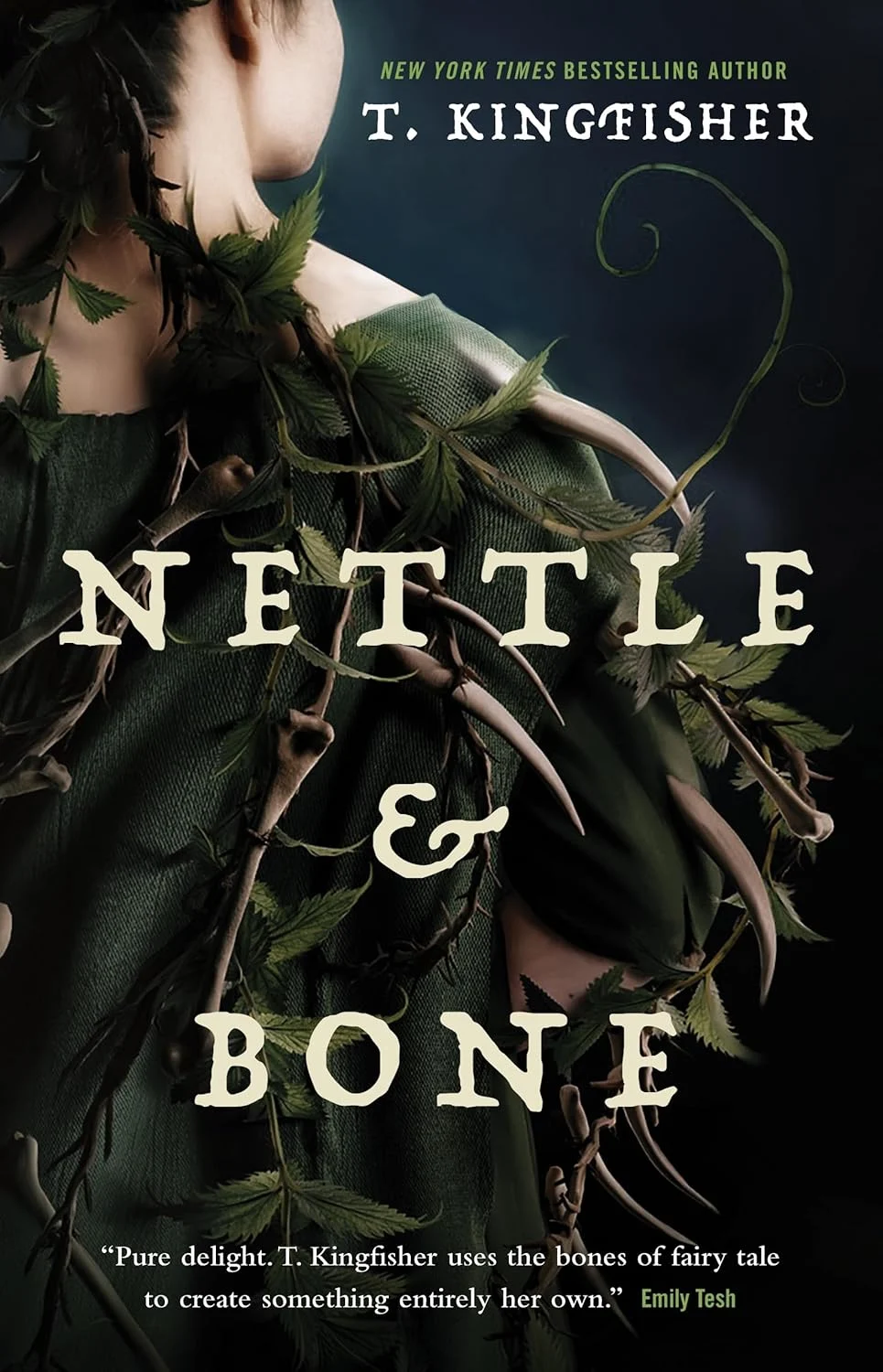
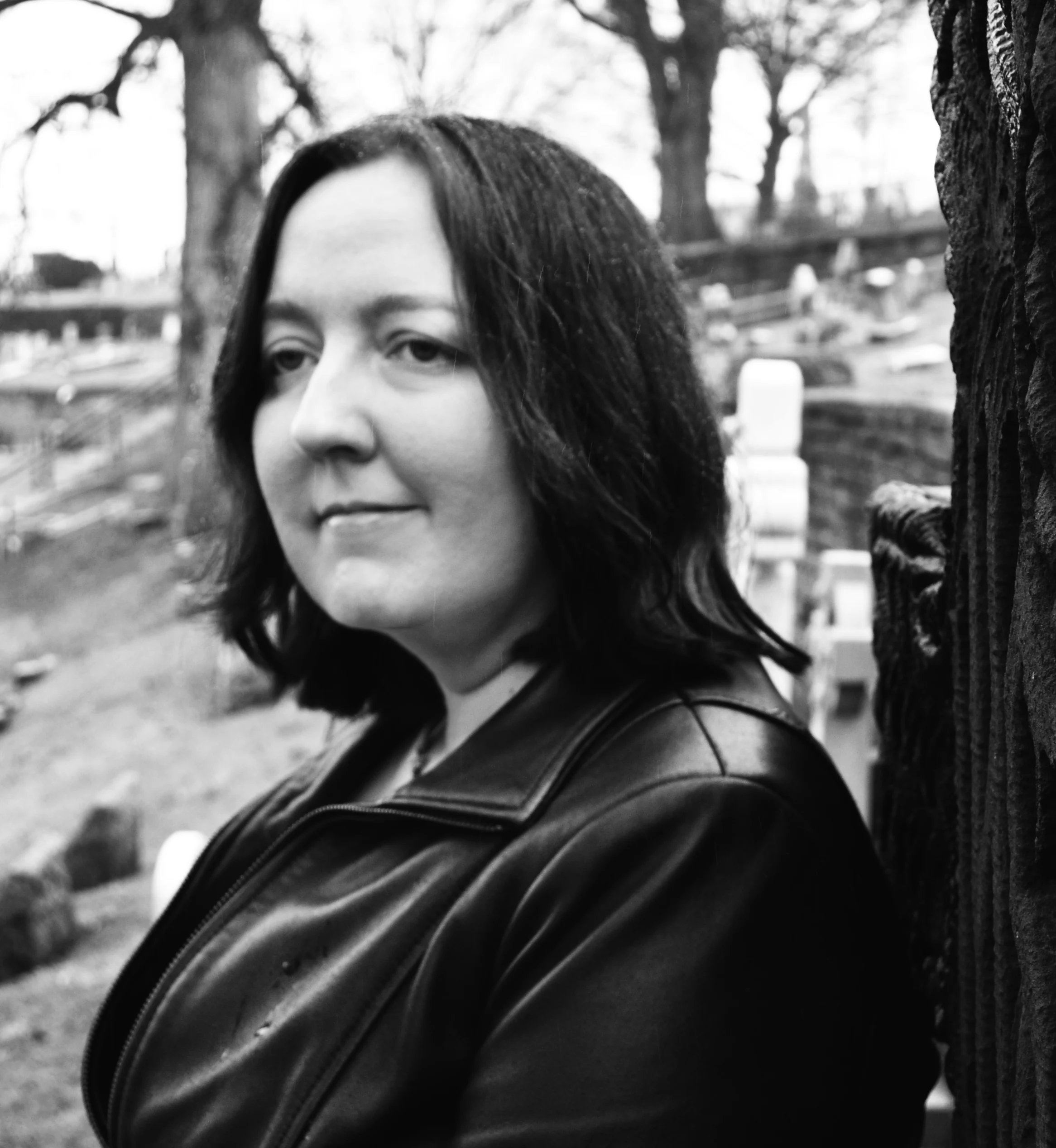 T. Kingfisher T. Kingfisher is the New York Times bestselling and Hugo Award–winning author of fantasy, horror, and occasional oddities, including What Feasts at Night, Nettle & Bone, What Moves the Dead, Thornhedge, A House with Good Bones, and A Sorceress Comes to Call. Under a pen name, she also writes bestselling children’s books. She lives in New Mexico with her husband, dog, and chickens, and does not trust roadrunners. For more information, visit www.redwombatstudio.com.
Author bio
Image of other work (left justified)
Author image, right justified
Featured Image – cropped cover (title featured)

Steve Davidson is the publisher of Amazing Stories.
Steve has been a passionate fan of science fiction since the mid-60s, before he even knew what it was called.